Why Elon's Tunnels Won't Solve Traffic
Still a road, just underground.

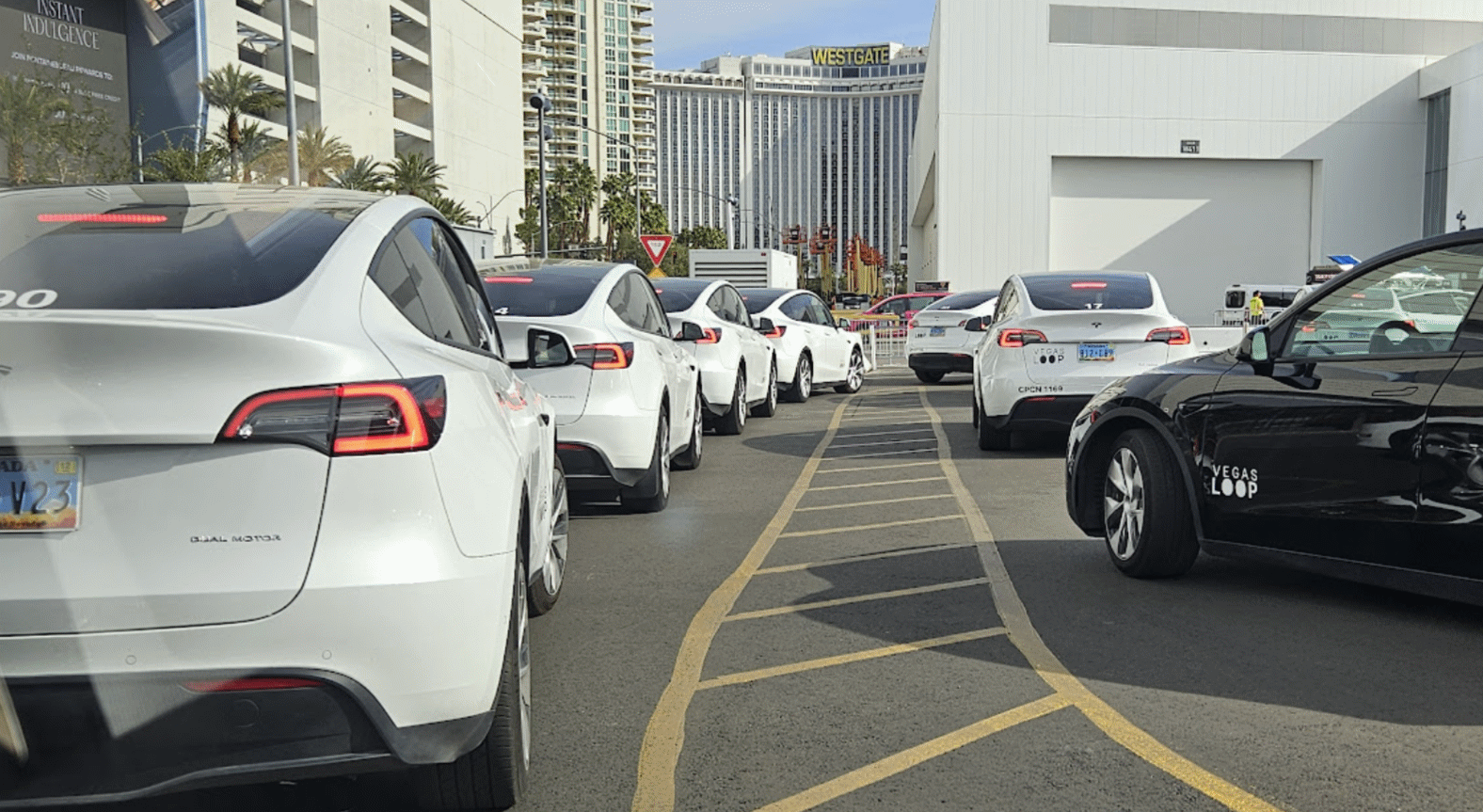
I rode the Boring Company’s tunnels at CES. Before entering the actual tunnel, I waited in a long line of cars, inching forward toward a single tunnel entrance. It was a strange place to find traffic, especially for a system that claims to eliminate it. But sitting there, watching everyone queue up to even enter the tunnel, the core problem became immediately obvious.
The Boring Company has long pitched its tunnels as a solution to urban congestion. Move cars below ground, increase capacity, and let traffic flow freely. On paper, it sounds like a clean, futuristic fix. In practice, at least at CES, the experience told a very different story. The tunnel itself was smooth enough, but getting into it was anything but. Cars had to slow, wait their turn, and even wait at traffic lights, just like they do on any surface road.
That wait is not a minor detail. It is the system’s limiting factor. No matter how fast vehicles move once inside the tunnel, the entire network is constrained by how many cars can enter and exit. Every tunnel needs ramps. Every ramp creates a bottleneck. The congestion does not disappear, it simply moves to the point of access. My experience at CES was not an edge case, it was the predictable result of designing a traffic system around individual cars.
More Lanes Doesn't Solve Traffic
This is where the broader promise starts to unravel. The Boring Company is often framed as a futuristic solution to transportation, but at its core, it is still just adding more lanes. The lanes just happen to be underground. Decades of traffic research have shown that adding lanes does not reduce congestion in the long term. Any short-term relief is quickly eaten up by induced demand, as easier driving encourages more people to drive.
A tunnel does not change this math. Cars still take up space. Drivers still choose similar peak travel times. If anything, a faster underground option risks pulling even more vehicles into the system.
Won't Autonomy Solve This Problem?
Supporters of the Vegas Loop will tell you that autonomy will fix these issues. In theory, self-driving vehicles could reduce headways and increase throughput. But what I experienced at CES was not a fleet of autonomous vehicles. It was human-driven cars, one at a time, feeding into a narrow entry point. Even with autonomy, the rules of physics still apply. Ramps, merges, safety buffers, and exits all impose hard limits on capacity.
Where Is The Transit!?
This all hits even harder when you look at the limited transit options in Las Vegas. The monorail is fantastic, but it could be so much better. Instead of digging tunnels, that investment could have been put into real transit infrastructure. Infrastructure that scales with demand and encourages people to leave their cars behind. Investing in what already exists would have delivered a real traffic solution instead of a flashy ride for a few.
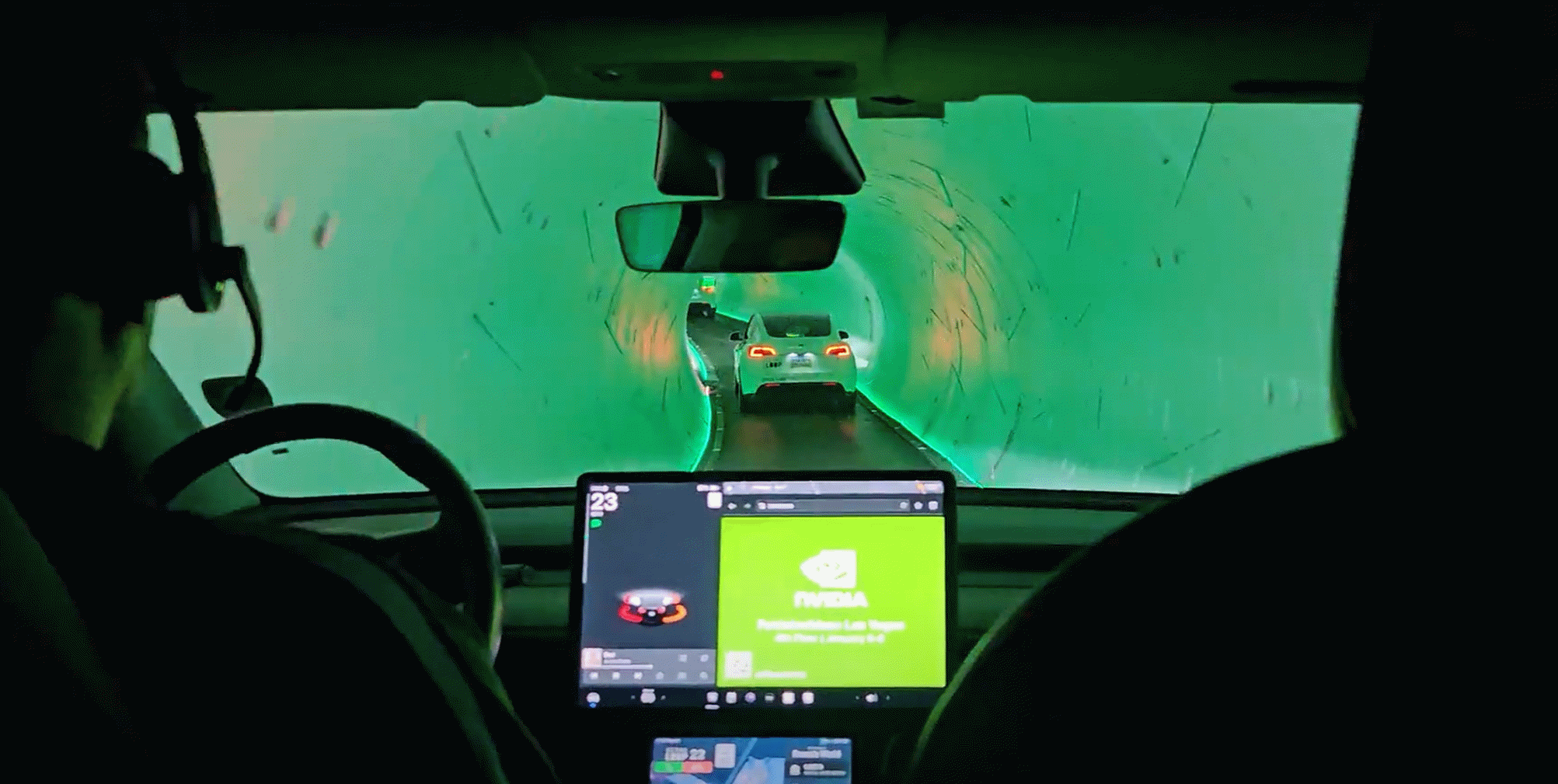
None of this is to say the tunnels are useless. They can move cars from point A to point B, and they may have niche applications where surface space is limited. But that is a far cry from solving traffic. Traffic is not a problem of where roads are located. It is a problem of how many cars we try to move through the same space at the same time.
You can move roads underground. You can make them look futuristic with RGB lights. But you cannot tunnel your way out of traffic.
If you want to see a more in-depth look at the Vegas Loop, check out this excellent video by CityNerd.